















Strengthening the Supply of Critical Infrastructure with Flexible Gas-Fired Power Plants
Reading time: approx. 3 minutes
Critical infrastructure must continue to function reliably even in the event of disruptions or outages. For this, secure and resilient energy supply is crucial. Gas engine-driven cogeneration power plants, combined heat and power (CHP) plants, and containerized modular power plants (MPP) can help secure the energy supply for critical infrastructure through distributed heat and power generation as well as flexible operating modes.
Mannheim, October 9, 2026
Critical infrastructure and facilities such as hospitals, water and energy utilities, certain industrial plants, and airports depend on reliable and resilient heat and power supply. Thanks to their flexible operation, high efficiency, and combined generation of heat and power, CHP plants and cogeneration power plants can play an important role in ensuring the energy supply for critical infrastructure.

Strengthening the Resilience of Critical Infrastructure
Critical infrastructure performs important functions and is therefore particularly worthy of protection. For example, this includes hospitals, care facilities, data centers, wastewater treatment plants, food producers, as well as airports and rail networks. The KRITIS Framework Act (KRITISDachG) went into force in Germany on March 17, 2026. The law establishes a nationwide legal framework to strengthen the physical resilience of critical infrastructure and requires operators to implement appropriate technical, security-related, and organizational measures.
To mitigate outages, operators can use efficient, decentralized energy systems. Cogeneration power plants, CHP plants, and modular power plants represent a flexible, cost-efficient solution. Apart from enabling distributed heat and power generation, they also offer flexibility in terms of operating modes and fuels.
Distributed, Resilient Heat and Power Generation with Cogeneration Power Plants, CHP Plants, and Modular Power Plants
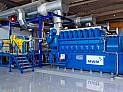
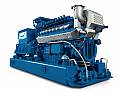
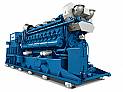
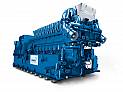
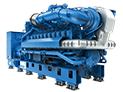
On-site cogeneration power plants, CHP plants, and containerized modular power plants with gas engines generate heat and power right where they are needed. This not only makes operators of critical infrastructure more independent, but also allows them to flexibly manage their energy supply to meet their needs. Driven by high-performance gas engines, MWM cogeneration power plants and CHP plants boast an overall efficiency of more than 90 percent, depending on the engine type and configuration. In addition, they can run on a wide range of fuels, including natural gas, biogas, and various special gases. Thanks to their high flexibility in terms of operation and fuel selection, CHP plants, containerized cogeneration power plants, and MPP are suitable for use across a wide range of segments and industries.
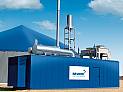
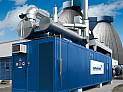
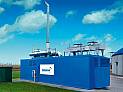
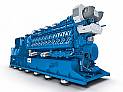
Modular power plants are especially suitable for operators who need a flexible, fast, and cost-efficient energy solution. The TCG 2032 Modular Power Plant (MPP) from MWM enables the establishment of an energy solution with an output of up to 4.5 MW in a modular containerized system. The mobile containerized solution is ready for operation in just 20 days—including module assembly, startup, and commissioning—and can be flexibly expanded to a full-fledged energy park.
Cogeneration Power Plants and CHP Plants as a Key Component of the Emergency Plan
Around the globe, cogeneration power plants and CHP plants are successfully deployed in critical infrastructure, including hospitals, data centers, airports, and municipal utilities. Because of the way they operate, they offer a number of technical advantages that make them a key component in ensuring the reliability of critical infrastructure. Cogeneration power plants capable of island-mode operation support off-grid operation in the event of a public power grid failure and—provided the fuel supply is secured—continue to deliver heat and power to consumers. In addition, cogeneration power plants can be integrated into multi-stage emergency power and island-mode concepts. A high overall efficiency of more than 90 percent makes CHP plants particularly attractive. The high fuel flexibility of cogeneration power plants and CHP plants also increases the resilience to fuel-supply disruptions.
Deployment of Cogeneration Power Plants and CHP Plants in Critical Infrastructure
In hospitals and care facilities, cogeneration power plants are mainly used to cover the base-load demand. When properly configured, cogeneration power plants capable of island-mode operation can support the supply to specific critical loads in the event of a power outage. They can be combined with UPS, battery, and emergency power systems to form a multi-stage power supply solution. Data centers require significant amounts of electricity for their servers as well as cooling capacity to dissipate the waste heat. The deployment of combined cooling, heat, and power (CCHP) plants simultaneously supply data centers with electricity and cooling . In food production, cogeneration power plants and CCHP plants can help maintain cold chains and continuous production processes. For example, dairies and bakeries use CCHP plants to generate steam or process heat or for deep-freezing. At wastewater treatment facilities, the sewage gas produced during wastewater treatment can be converted into electricity in an on-site cogeneration power plant.
Gas engine-driven cogeneration power plants, CHP plants, and modular power plants thus provide operators of critical infrastructure and facilities with reliable and highly efficient heat and power supply. They can also serve as a reliable component of a comprehensive emergency plan when it comes to protecting infrastructure from the consequences of outages, helping to maintain business operations.
Cogeneration power plants, CHP plants, and modular power plants can make an important contribution to the resilience of critical infrastructure. Depending on their technical design, they can be integrated into emergency power and island-mode concepts, enabling reliable, efficient, and demand-oriented energy supply.
Benefits for Plant Operators
- Higher security of supply
- On-site heat and power generation
- Modular plant expansion possible
- Improved energy efficiency
- More resilient energy supply system
- Reduced dependence on the power grid
- Demand-based heat, power, and cooling supply
- More predictable and flexible energy supply
We Assist You in Rolling Out Your Energy Project
Are you looking for economical trigeneration for your business? Learn more about our integrated solutions and how MWM gas generator sets can support your business. Contact us for custom-tailored advice:
https://www.mwm.net/en/contact/contact-sales/
Would you like to learn more about MWM energy solutions with MWM gas engines, CHP plants, and cogeneration power plants? For interesting information about distributed energy generation with our engines and products, go to: https://www.mwm.net/en/distributed-power-plants/